
Tissue Models
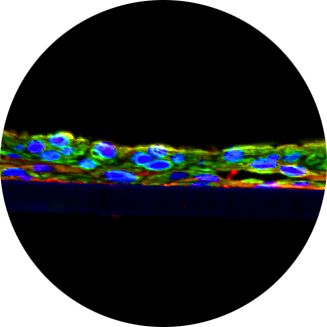
Use of in vitro reconstructed intestinal epithelium to study effects of repeated aluminum exposure
- TR Number: 1098
- Authors: G. De Negri Atanasio, G. Allaria, L. Dondero, F. Rispo, F. Tardanico, E. Lertora, K. Cortese, S. Ferrando, F. Soggia, J. Markus, S. Letasiova, T. Filippini, F. Robino, M. Zanotti Russo, M. Klausner, S. Ayehunie, E. Grasselli
- Keywords: EpiIntestinal SMI-100, GI toxicity, Aluminum Al3+, chronic exposure, TEER, Barrier integrity, Histology, Ultrastructure, microvilli length, Transmission Electron Microscopy TEM, permeation, flux, metallothionein, metallothionein, MT1E, MT2A, vacuoles
- Materials Tested: Aluminum Al3+
- Institution: DISTAV, University of Genoa, 16132 Genoa, Italy, Cellular Electron Microscopy Laboratory, DIMES, Human Anatomy, University of Genoa, 16132 Genoa, Italy, DCCI, University of Genoa, Via Dodecaneso 31, 16146 Genoa, Italy, MATTEK IVLSL Now part of Sartorius, Bratislava, Slovakia, CREAGEN—Environmental, Genetic and Nutritional Epidemiology Research Center, Section of Public Health, Department of Biomedical, Metabolic and Neural Sciences, University of Modena and Reggio Emilia, 41125 Modena, Italy, Angel Consulting Via San Senatore 14, 20122 Milano, Italy, Mattek Now part of Sartorius, Ashland, MA USA, Centro 3R, Interuniversity Centre for the Promotion of 3Rs Principles in Teaching and Research, Italy
Abstract
Background and Objectives
Aluminum (Al3+) is one of the most prevalent elements in the environment and is commonly found in dietary products. The free cation, Al3+, is physiologically reactive and thus may affect metabolism when ingested. The gastrointestinal tract plays a pivotal role in its absorption, and it is estimated that approximately 40% of ingested aluminum is retained in the intestinal tissues. The present study aims to evaluate morphological alterations, barrier effects, and gene expression pattern changes after repeated exposure of in vitro intestinal tissue models to aluminum.