
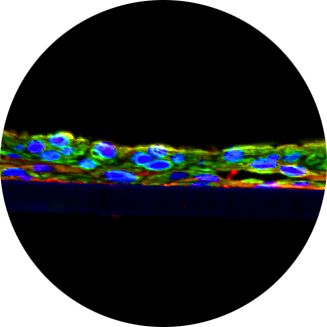
APPLICATIONS OF THE PHYTOMEDICINE ECHINACEA PURPUREA (PURPLE CONEFLOWER) IN INFECTIOUS DISEASES.
- TR Number: 707
- Keywords: Anti-infectious agents, Antimicrobial, Antivirus, EpiAirway tissue, Goblet cells, IL-6, IL-8, Infectious diseases, MUC5A Mucin secretion, Rhinovirus, Rhinovirus type 1A
Extracts of Echinacea purpurea (EP, purple coneflower) have been used traditionally in North America for the treatment of various types of infections and wounds, and they have become very popular herbal medicines globally. Recent studies have revealed that certain standardized preparations contain potent and selective antiviral and antimicrobial activities. In addition, they display multiple immune-modulatory activities, comprising stimulation of certain immune functions such as phagocytic activity of macrophages and suppression of the proinflammatory responses of epithelial cells to viruses and bacteria, which are manifested as alterations in secretion of various cytokines and chemokines. These immune modulations result from upregulation or downregulation of the relevant genes and their transcription factors. All these bioactivities can be demonstrated at noncytotoxic concentrations of extract and appear to be due to multiple components rather than the individual chemical compounds that characterize Echinacea extracts. Potential applications of the bioactive extracts may go beyond their traditional uses.
Reference Application
- Absorption
- Antimicrobial
- Buccal delivery
- Genotoxicity
- Mucosal delivery
- Reproducibility - skin tissue models
- UV protection
- Corneal Drug Delivery
- UV damage
- transporters
- Regulatory Approval
- Review Article
- LOAEL
- Drug delivery
- Infectious disease research
- Buccal drug delivery
- Pharmacotoxicology
- Nasal absorption
- Nanotechnology
- Aging
- Respiratory Disease
- Bacterial infection
- Pollution
- Mildness Testing
- Barrier Disruption
- UVB
- Irritation
- Infection
- Mucosal irritation
- Psoriasis
- Vaginal irritation
- Respiratory immunotoxicity
- Human-on-a-chip
- Atopic Dermatitis
- DNA Damage
- Colitis
- Drug ADME
- Hair Growth
- scalp health
- Permeation
- Infections
- Cosmetics
- Metabolism
- Mucous
- Respiratory infection
- Viral Infection
- Melanogenesis
- Antiviral
- Gastrointestinal Disease
- Hazard assessment
- Biomedical Devices
- artificial saliva
- Skin irritation
- Toxicity
- Cytokine analysis
- Immulogical research
- Nanoparticle toxicology/penetration
- Respiratory toxicology
- MMPs
- Intestinal Permeation
- Bacterial colonization
- Translational toxicology
- Dry skin
- drug skin compatibility
- bacterial adherence
- Allergenicity
- Antioxidants
- Drug absorption
- Immunologicaal research
- Toxicology
- Skin cancer
- Photoaging
- Electrolyzed Water
- Transbuccal drug delivery
- XtraMild skin mildness testing
- Skin moisturization
- Protein Expression
- PBPK Modeling
- Immunological Research
- Apoptosis
- Intestinal toxicity
- Microbicides
- Nanotoxicology
- Skin corrosion
- Skin Sensitization
- Fibrosis
- Oral Pathology
- bacterial vaginosis
- ADME
- Gastrointestinal Inflammation
- anti-wrinkling
- Immunogenicity
- Basic dermal research
- Respiratory research
- Immunotoxicity
- Ocular irritation
- Penetration
- Medical Devices
- Pulmonary Fibrosis
- Oral infection
- vaginal microbiome
- Microphysiological system
- Gastrointestinal Irritation
- Nicotine pouch products
- Inflammation
- Asthma
- Skin corrosion Absorption
- Mucosal
- Oral candidiasis
- Skin lightening
- Organ-on-a-Chip
- Oxidative Stress
- Oral inflammation
- Collagen Remodeling
- Hyperpigmentation
- Barrier Function
- intranasal drug delivery
- Microbial infection
- COPD
- Smoking
- Respiratory toxicity
- Oral irritation
- Skin
- Oral Disease Research
- Skin Damage
- Ocular toxicology
- Drug Screening
- Skin de-pigmentation
- Gastrointestinal Toxicity
- permeation enhancement
- Wound healing
- Smoke
- Tobacco
- Inhalation Toxicology
- Oral mucositis
- Smoker
- Space Research
- Skin Barrier
- Validation
- Nephrotoxicity
- Cancer Research
- Skin Brightening
- excipients
- Phototoxicity
- Research
- Drug development
- Nanoparticles
- Skin pigmentation
- Gingivitis
- Dry Eye
- Drug Metabolism
- Biofilm
- Hepatotoxicity
- Personalized Medicine
- Food Additives
- Sub-categorization
- UV radiation
- Basic cutaneous research
- Epithelial restitution
- Microbial
- Pigmentation
- Transbuccal permeation/penetration
- Micronucleus Assay
- Skin aging
- Intestinal barrier
- Liver Toxicity
- Consumer products
- Biocompatibility
- Anti-aging
- Basic DC research
- Eye irritation
- Microbicide
- Pigmentation studies
- Oral mucosa
- microbiome
- Skin disease
- SARS-CoV-2
- Skin Toxicity
- Cytotoxicity
- reproducibility
- Skin hydration
- UV
- Genetic toxicology
- Microbicide testing
- Radiation
- Tumor invasion
- Probiotic
- Intestinal infection
- Skin re-epithelization
- Crohn's Disease
- Inflammatory response
- respiratory irritation
- UV toxicity
- Basic respiratory research
- Genomics
- STD infection
- Reproducibility - eye (ocular) tissue model
- UV light
- Irritation>Eye Irritation OECD TG 492
- Skin differentiation
- Barrier repair
- Inflamed Bowel Disease
- Visible Light
- pesticides
Reference Product
Ready to advance your science?
Our team is ready to provide a cost-free consultation to determine how we can help you reach your research and testing goals. Contact our team of experts today.