
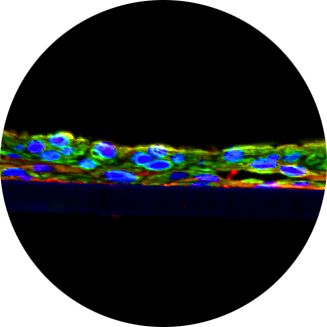
Using a reconstructed human vaginal epithelium model to assess irritation: A proof-of-concept study supporting regulatory qualification of the method for use with personal lubricants
- TR Number: 1096
- Authors: Jessica Perrin, Gertrude-Emilia Costin, Seyoum Ayehunie, Helena Kandárová, Timothy Landry, Jeffrey Brown, Amy J Clippinger
- Keywords: EpiVaginal VEC-100, validation study, personal lubricants, contraceptive, chassis formulation, glycerin, hydroxyethyl cellulose, potassium sorbate, sodium benzoate, citric acid, rabbit vaginal irritation test, RVI, context of use, interlab reproducibility
- Materials Tested: personal lubricants, contraceptive, chassis formulation, glycerin, hydroxyethyl cellulose, potassium sorbate, sodium benzoate, citric acid
- Link to Article: https://pubmed.ncbi.nlm.nih.gov/41548851/
Consumers tend to think of personal lubricants as personal care products or cosmetics that are not tested using animals, but the regulatory classification and hence the testing requirements for these products vary by country. For example, in the United States, regulations and guidance classify personal lubricants as medical devices, for which manufacturers must perform a rabbit vaginal irritation (RVI) test as part of a typical safety assessment submitted to the Food and Drug Administration (FDA). This publication discusses replacing the RVI with an in vitro reconstructed human vaginal epithelium (RHVE) test method, which uses the EpiVaginal model to assess the irritation potential of personal lubricants. The proof-of-concept studies presented here indicate that this in vitro test method can rank water-based personal lubricants by vaginal irritation potential. Scientific confidence in this test method is evaluated based on an established framework that considers the method’s context of use, human biological relevance, technical characterization, data integrity and transparency, and independent review. A proposed workplan aims to further develop and qualify the in vitro test method for regulatory acceptance in assessing vaginal irritation of personal lubricants, and expanding its use to other products.