
The Utility of Human Milk Oligosaccharides against Group B Streptococcus Infections of Reproductive Tissues and Cognate Adverse Pregnancy Outcomes
- TR Number: 1084
- Authors: Rebecca E. Moore, Sabrina K. Spicer, Jacky Lu, Schuyler A. Chambers, Kristen N. Noble, Jonathan Lochner, Rebecca C. Christofferson, Karla A. Vasco, Shannon D. Manning, Steven D. Townsend, Jennifer A. Gaddy
- Keywords: EpiVaginal VEC-100, Streptococcus agalactiae, Group B Streptococcus, GBS, , human milk oligosaccharides, bacterial adherences, microbiome, bacterial infection, bacterial vaginosis, field-emission gun scanning electron microscopy, FEG-SEM, biofilm, IL-10, IL-1ra, TNF-a, MIP-1a, MIP-1b, MCP-1, IL-2, IL-6, IL-8, IL-1a, IL-1b, IL-12p70, IL-12p40, IL-3, IL-4, IL-5
- Materials Tested: Streptococcus agalactiae Group B Streptococcus, human milk oligosaccharides
- Link to Article: https://pubs.acs.org/doi/10.1021/acscentsci.3c00101
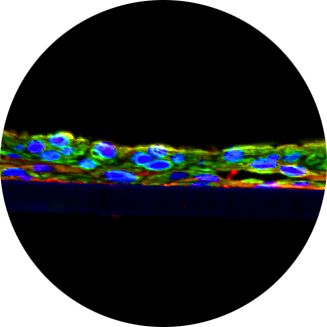
Preterm birth affects nearly 10% of all pregnancies in the United States, with 40% of those due, in part, to infections. Streptococcus agalactiae (Group B Streptococcus, GBS) is one of the most common perinatal pathogens responsible for these infections. Current therapeutic techniques aimed to ameliorate invasive GBS infections are less than desirable and can result in complications in both the neonate and the mother. To this end, the need for novel therapeutic options is urgent. Human milk oligosaccharides (HMOs), an integral component of human breast milk, have been previously shown to possess antiadhesive and antimicrobial properties. To interrogate these characteristics, we examined HMO-mediated outcomes in both in vivo and ex vivo models of GBS infection utilizing a murine model of ascending GBS infection, an EpiVaginal human organoid tissue model, and ex vivo human gestational membranes. Supplementation of HMOs resulted in diminished adverse pregnancy outcomes, decreased GBS adherence to gestational tissues, decreased colonization within the reproductive tract, and reduced proinflammatory immune responses to GBS infection. Taken together, these results highlight the potential of HMOs as promising therapeutic interventions in perinatal health.