
THE EFFECTS OF IL-20 SUBFAMILY CYTOKINES ON RECONSTITUTED HUMAN EPIDERMIS SUGGEST POTENTIAL ROLES IN CUTANEOUS INNATE DEFENSE AND PATHOGENIC ADAPTIVE IMMUNITY IN PSORIASIS.
- TR Number: 432
- Authors: 1Sa, S.M., Valdez, P.A., Wu, J., Jung, K., Zhong, F., Hall, L., Kasman, I., Winer, J., Modrusan, Z., Danilenko, D.M., Ouyang, W. 1Genentech, Department of Pathology, South San Francisco, CA.
- Keywords: Acanthosis, Beta-defensins, Cutaneous innate defense, EpiDerm, Epithelial cells, Hypogranulosis, IL-10 family of cytokines, IL-19, IL-20, IL-20 subfamily cytokines, IL-22, IL-24, IL-26, Immunopathology of psoriasis, Inflammation, Inflammatory, Inflammatory response, Kallikreins, Nuclear localization, Pathogenic adaptive immunity, Primary human keratinocytes, Psoriasis, Psoriasis-associated keratin 16, Psoriasis-associated protein S100A7, Psoriatic skin, Receptor complex R1 subunits, Reconstituted human epidermis (RHE), S100 family proteins, Stat3, Wound healing re-epithelialization
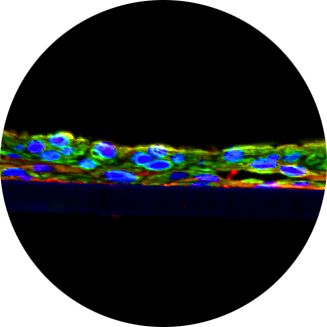
This study by researchers at Genentech demonstrated that MatTek’s EpiDerm human skin tissue equivalent can be used to study the immunopathology of psoriasis. IL-19, IL-20, IL-22, IL-24, and IL-26 are members of the IL-10 family of cytokines that have been shown to be up-regulated in psoriatic skin. Contrary to IL-10, these cytokines signal using receptor complex R1 subunits that are preferentially expressed on cells of epithelial origin; thus, we henceforth refer to them as the IL-20 subfamily cytokines. In this study, researchers at Genentech show that primary human keratinocytes (KCs) express receptors for these cytokines, and that IL-19, IL-20, IL-22, and IL-24 induce acanthosis in EpiDerm reconstituted human epidermis (RhE) in a dose-dependent manner. These cytokines also induce expression of the psoriasis-associated protein S100A7 and keratin 16 in RHE and cause persistent activation of Stat3 with nuclear localization. IL-22 had the most pronounced effects on KC proliferation and on the differentiation of KCs in reconstituted human epidermis (RhE), inducing a decrease in the granular cell layer (hypogranulosis). Furthermore, gene expression analysis performed on EpiDerm cultured reconstituted human epidermis (RhE) treated with these cytokines showed that IL-19, IL-20, IL-22, and IL-24 regulate many of these same genes to variable degrees, inducing a gene expression profile consistent with inflammatory responses, wound healing re-epithelialization, and altered differentiation. Many of these genes have also been found to be up-regulated in psoriatic skin, including several chemokines, beta-defensins, S100 family proteins, and kallikreins. These results confirm that IL-20 subfamily cytokines are important regulators of epidermal KC biology with potentially pivotal roles in the immunopathology of psoriasis.