
Performance of the DASF compared to other combinations of OECD NAMs for eye hazard identification of surfactants
- TR Number: 1093
- Authors: Nathalie Alépée, Karsten R Mewes, Takayuki Abo, Alessandra Cavarzan, Chelsea O'Driscoll, Els Adriaens
- Keywords: EpiOcular EIT, OCL-200-EIT, Defined approach for surfactants DASF, eye hazard assessment, eye irritation, modeified Short Time Exposure, STE, OECD TG 491, corneal epithelial cells, SkinEthic HCE EIT UN GHS classification, full replacement test, bottom up approach, top down approach, Ethylhexyl acid phosphate ester, Benzalkonium chloride 10%, Benzethonium chloride 10%, Domiphen bromide 10%, Distearyldi-methyl-ammonium chloride, Ethyl lauroyl arginate HCl, Cetyl pyridinium bromide 10%, Triton X-100, Benzalkonium chloride 5%, Coco amido-propyl betaine 25%, Surfonic HDL-1 (Nonyl phenol ethoxylate, branched), Cetyltrimethyl ammonium bromide 10%, Benzalkonium chloride 1%, Di(2-ethylhexyl) sodium sul-phosuccinate 10%, Cetylpyridinium chloride 10%, Sodium lauryl sulphate 15%, Stearyltrime-thylammonium chloride 10%, Didecyl dimethyl ammonium chloride 1%, N-Lauroyl sarcosine Na salt 30%, 1-Hexadeca-naminium, N,N,N-trimethyl-, chloride 25%, Triton X-100 10%, Cetyl pyridinium bromide 6%, Cetyl pyridinium bromide 1%, Deoxycholic acid Na salt 10%, Lauryl sulpho-betaine 10%, Triton X-100 5%, N-Lauroyl sarcosine Na salt 10%, Methyl N,N, N-trimethyl-4-[(4,7,7-trimethyl-3-oxobicyclo [2.2.1]hept-2-ylidene)methyl]-anilinium sulphate, Benzethonium chloride 1%, 1-Hexadeca naminium, N,N, N-trimethyl-, chloride 2%, Behentrimonium chloride 5%, N-Lauroyl sarcosine Na salt 3%, Sodium lauryl sulphate 3%, Cetyl pyridinium bromide 0.1%, Sodium lauryl sulphate 1%, Polyethylene glycol mono-laurate (10EO) 10%, Polyglyceryl-3-diisoocta-decanoate, Steareth-10 allyl ether/ acrylates co-polymer 30%, Triton X-100 1%, Tween 20, Tween 80, Tween 80 10%, Polyoxy-ethylene 23 lauryl ether (Brij-35) 10%, Cetylpyridinium chloride 0.1%, Polyoxy-ethylene 8-stearate (Myrj-45), Polyethylene glycol (PEG-40) hydrogenated castor oil, Cellulose,2-(2-hydroxy-3-(trimethyl-ammonium) propoxy)ethyl ether chloride, Myristyl myristate
- Materials Tested: Ethylhexyl acid phosphate ester, Benzalkonium chloride 10%, Benzethonium chloride 10%, Domiphen bromide 10%, Distearyldi-methyl-ammonium chloride, Ethyl lauroyl arginate HCl, Cetyl pyridinium bromide 10%, Triton X-100, Benzalkonium chloride 5%, Coco amido-propyl betaine 25%, Surfonic HDL-1 (Nonyl phenol ethoxylate, branched), Cetyltrimethyl ammonium bromide 10%, Benzalkonium chloride 1%, Di(2-ethylhexyl) sodium sul-phosuccinate 10%, Cetylpyridinium chloride 10%, Sodium lauryl sulphate 15%, Stearyltrime-thylammonium chloride 10%, Didecyl dimethyl ammonium chloride 1%, N-Lauroyl sarcosine Na salt 30%, 1-Hexadeca-naminium, N,N,N-trimethyl-, chloride 25%, Triton X-100 10%, Cetyl pyridinium bromide 6%, Cetyl pyridinium bromide 1%, Deoxycholic acid Na salt 10%, Lauryl sulpho-betaine 10%, Triton X-100 5%, N-Lauroyl sarcosine Na salt 10%, Methyl N,N, N-trimethyl-4-[(4,7,7-trimethyl-3-oxobicyclo [2.2.1]hept-2-ylidene)methyl]-anilinium sulphate, Benzethonium chloride 1%, 1-Hexadeca naminium, N,N, N-trimethyl-, chloride 2%, Behentrimonium chloride 5%, N-Lauroyl sarcosine Na salt 3%, Sodium lauryl sulphate 3%, Cetyl pyridinium bromide 0.1%, Sodium lauryl sulphate 1%, Polyethylene glycol mono-laurate (10EO) 10%, Polyglyceryl-3-diisoocta-decanoate, Steareth-10 allyl ether/ acrylates co-polymer 30%, Triton X-100 1%, Tween 20, Tween 80, Tween 80 10%, Polyoxy-ethylene 23 lauryl ether (Brij-35) 10%, Cetylpyridinium chloride 0.1%, Polyoxy-ethylene 8-stearate (Myrj-45), Polyethylene glycol (PEG-40) hydrogenated castor oil, Cellulose,2-(2-hydroxy-3-(trimethyl-ammonium) propoxy)ethyl ether chloride, Myristyl myristate
- Link to Article: https://pubmed.ncbi.nlm.nih.gov/39228327/
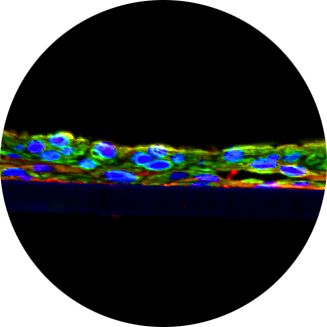
Currently, the OECD has adopted three defined approaches (DAs) for eye hazard identification of non-surfactant liquids and solids (TG 467) according to the three UN GHS categories. We are now expanding the applicability domain with a new DA for chemicals having surfactant properties (DASF). It is based on a combination of recombinant human cornea-like epithelium test methods (TG 492: EpiOcular™ EIT or SkinEthic™ HCE EIT) and a modification of the Short Time Exposure (TG 491) method. The aim of the current study was to compare the performance of the DASF with the performance of other NAMs currently included in the OECD TGs and with the classification based on the Draize eye test to identify potential additional DAs. The minimum performance criteria (75% Cat. 1, 50% Cat. 2, 70% No Cat.) used for the adoption of the DAs currently included in TG 467 were used for this purpose. The DASF identified 90.9% of Cat. 1 (N = 23), 77.8% of Cat. 2 (N = 9), and 76.0% of No Cat. (N = 17) surfactants, meeting the minimum performance criteria. Some of the NAMs that are currently included in the TGs seem promising methods to become part of a DA to identify Cat. 1 or No Cat. for eye hazard assessment of surfactants. However, the number of surfactants that have been tested to evaluate their reliability and relevance was often too low. To date, the DASF is the only DA that has evaluated a sufficiently large number of surfactants and whose performance meets the minimum performance criteria.