
INHIBITORY EFFECTS OF A NOVEL ASCORBIC DERIVATIVE, DISODIUM ISOSTEARYL 2-O-L-ASCORBYL PHOSPHATE ON MELANOGENESIS.
- TR Number: 474
- Authors: Matsuda1, S., Shibayama1,2, H., Hisama1, M., Ohtsuki2, M., and Iwaki3, M.1Central Research Center, Toyo Beauty Co., Ltd.; 3-13-8 Higashinakamoto, Higashinari-ku, Osaka 537-0021, Japan: 2Department of Dermatorogy, Jichi Medical University; 3311-1 Yakushiji, Shimotsuke, Tochigi 329-0498, Japan: and 3Faculty of Pharmaceutical Sciences, Kinki University; 3-4-1 Kowakae, Higashi-Osaka, Osaka 577-8502, Japan.Chem.
- Keywords: MEL-300A, Macroscopic views, Melanin content, Melanin synthesis, MelanoDerm, Microscopic views, Skin whitening
- Materials Tested: Ascorbic derivative, Disodium isostearyl 2-0-L-ascorbyl phosphate (VCP-IS-2Na), L-ascorbic acid (VC)
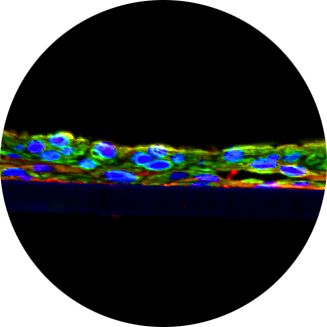
This study by researchers at Toyo Beauty Co., Ltd., Jichi Medical University, and Kinki University (Japan) demonstrated how MatTek’s MelanoDerm 3-D human skin tissue equivalent containing both keratinocytes and melanocytes can be used as an in vitro test of the safety and effectiveness of a novel skin whitening agent. Researchers from Toyo Beauty Co., Ltd., Jichi Medical University and Kinki University (Japan) investigated the inhibitory effects of a novel amphiphilic ascorbic derivative, disodium isostearyl 2-O-L-ascorbyl phosphate (VCP-IS-2Na), synthesized from a hydrophilic ascorbic derivative, sodium-2-O-L-ascorbyl phosphate (VCP-Na), on melanogenesis in cultured human melanoma cells, normal human melanocytes, and three-dimensional cultured human skin models (MelanoDerm). Melanin synthesis in melanoma cells treated with VCP-IS-2Na at 300µM and melanocytes treated with VCP-IS-2Na at 100µM decreased to 23% and 52% of that in non-treated cells, respectively, and the cell viability was not affected. VCP-IS-2Na also significantly suppressed the cellular tyrosinase activity of melanoma cells and melanocytes. Melanin synthesis in human skin models was evaluated by macro- and microscopic observations of its pigmentation and quantitative measurements of melanin. Treatment of the human skin models with 1.0% VCP-IS-2Na did not inhibit cell viability, while melanin synthesis was decreased to 21% of that in the control. In contrast, L-ascorbic acid (VC) and VCP-Na did not seem to inhibit melanin synthesis and cellular tyrosinase activity. These results indicate that VCP-IS-2Na may be an effective whitening agent for the skin, and we expect the application of VCP-IS-2Na in the cosmetic industry.