
HIV TYPE 1 FAILS TO TRIGGER INNATE IMMUNE FACTOR SYNTHESIS IN DIFFERENTIATED ORAL EPITHELIUM.
- TR Number: 551
- Authors: Nittayananta1, W., Hladik2,3,4, F., Klausner5, M., Harb6, S., Dale3,7,8,9, B.A., and Coombs3,6, R.W. 1Epidemiology Unit, Faculty of Medicine, Prince of Songkla University, Hat Yai, Songkhla 90110, Thailand. 2Departments of Obstetrics and Gynecology and 3Department of Medicine, University of Washington, Seattle, Washington 98104. 4Vaccine and Infectious Disease Institute, Fred Hutchinson Cancer Research Center, Seattle, Washington 98109. 5MatTek Corporation, Ashland, Massachusetts 01721. 6Department of Laboratory Medicine, 7Department of Oral Biology, 8Department of Periodontics, and 9Department of Biochemistry, University of Washington, Seattle, Washington 98104.
- Keywords: CCL5, Chemokine (C-C motif) ligand , Confocal microscopy, EpiOral, HIV, HIV-1, HIV-1 binding, HIV-1 penetration, Human beta defensin 2 (hBD-2), IL-1beta, IRF1, Innate immune factor, Interferon regulatory transcription factor, Interleukin-1beta, Mock-infected PHA-stimulated lymphoblasts, ORL-200, Oral mucosa, R5-tropic HIV-1, SLPI, Secretory leukocyte protease inhibitor, X4-tropic HIV-1
- Materials Tested: HIV, R5-tropic HIV-1, TNF-alpha, X4-tropic virus
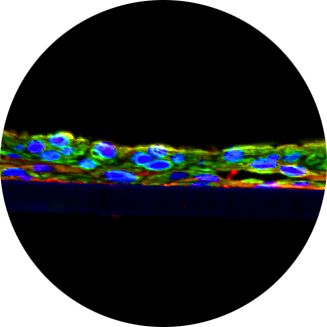
This study by scientists at Prince of Songkla University (Thailand), the University of Washington, Fred Hutchinson Cancer Research Center and MatTek Corp. demonstrated that MatTek’s EpiOral in vitro 3-D human buccal (inner cheek) tissue equivalent can be used to model the in vivo response to HIV-1 virus exposure. The oral mucosa is relatively resistant to human immunodeficiency virus type 1 (HIV-1) transmission. The mechanisms contributing to this resistance remain incompletely understood, but may include HIV-induced synthesis of innate immune factors. Researchers used fully differentiated oral epithelium (EpiOral) as a surrogate for the oral mucosa in vivo, exposed it to X4- and R5-tropic HIV-1 in culture, and quantified mRNA expression of six innate immune factors. Neither virus increased expression of human beta defensin 2 (hBD-2) mRNA over supernatants from uninfected lymphoblast controls. HIV-1 also failed to induce mRNA of four additional innate immunity-related genes. Similar results were obtained with oral monolayer epithelial cells. Interestingly, the X4-tropic virus inhibited mRNA expression of hBD-2, and of three of the other factors, at higher dosages in the differentiated oral epithelium, but not the monolayers. The failure of HIV-1 to induce innate immune factors in the differentiated epithelium was not due to a lack of tissue penetration, as we detected fluorescence-tagged virions up to 30 µm deep from the apical surface. HIV-1 does not trigger de novo innate immune factor synthesis in oral epithelium, pointing to the role of a constitutive innate immunity for protection against HIV-1 in the oral cavity.