
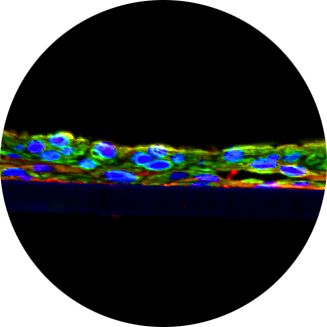
EURL ECVAM – Cosmetics Europe Prospective validation study of EpiOcular™ EIT & SkinEthic™ HCE
- TR Number: 769
- Authors: J. Barroso1, N. Alépée2, T. Cole1, C. Eskes3, S. J. Freeman4, R. Liška1, P. McNamee5,6, U. Pfannenbecker7, A. A. Reus8, C. M. Rubingh9, M. W. Schaeffer1 and V. Zuang1
- Keywords: Validation study, EpiOcular Eye Irritation Test (OCL-EIT), Optimized protocol, Intra-laboratory reproducibility, Inter-laboratory reproducibility, Predictive capacity, GHS classification, Animal replacement, Solids protocol, Cosmetics Europe/ECVAM validation, Eye Irritation Validation Study.
- Materials Tested: Acetoxy, acrylamide, acrylate, acylal, alcohol, aldehyde, aliphatic amine (primary), aliphatic amine (secondary), aliphatic amine (tertiary), alkane branched with quaternary carbon, alkane (branched with tertiary carbon), alkene, alkenyl halide, alkoxy, alkoxySilane, alkyl halide, allyl, amidine, aminoaniline meta, ammonium salt, aniline, aromatic amine, aromatic heterocyclic halide, aromatic perhaologencarbons, aryl, aryl halide, azo, benzamide, benzodioxole, benzoxathiole S-oxide, benzthiazolinone/benzoisothiazolinone, benzyl, bicyclopheptane, biphenyl, bridged-ring carbocycles, carbazole, carbonate, carboxamide, carboxylic acid, carboxylic acid ester, cycloalkane, cycloketone, dihydroxyl group, diketone, dioxolane, disulfide, enol, epoxide, ether, formylamino, furanone/furanondione, fused carbocyclic aromatic, fused ring triazol pyrimidine, fused saturated heterocycles, fused unsaturated heterocycles, guanidine, heterocyclic phenol, imidazole, indandione, isopropyl, ketone, ketoxime derivatives, lactam, lactone, melamine, methacrylate, naphtalene, nitrile, nitrobenzene, oxocarboxylic acid, oxolane, perhalogenated carbons derivatives, phenol, phosphate ester, piperidine, precursors quinoid compounds, pyrazole, pyrimidine, quinazoline, saturated heterocyclic amine, saturated heterocyclic fragment, silane, sulfate, sulfide, sulfonamide, sulfonate ester, sulfonic acid, sulfonyl urea, tert-Butyl, thioalcohol, triazine, triazole, unsaturated heterocyclic amine, unsaturated heterocyclic fragment, urea derivatives, inorganic salt.
A prospective validation study of two Reconstructed human Tissuebased in vitro test methods (EpiOcular™ EIT and SkinEthic™ HCE) was conducted by EURL ECVAM and Cosmetics Europe to evaluate their usefulness to identify chemicals as either not classified for serious eye damage/eye irritation (No Category) or as classified (Category1/Category 2) within UN GHS, in the framework of a Bottom-Up/Top-Down test strategy (Scott et al., 2010). The study assessed the validity of two EpiOcular™ EIT protocols for liquids and solids, two independent SkinEthic™ HCE protocols based on short-time (SE) and long-time (LE) exposures and a test strategy combining SE and LE. The results and conclusions of this study will be presented. Briefly, over 100 chemicals were tested and both methods showed high reproducibility (>90%). The EpiOcular™ EIT liquids protocol met all the study acceptance criteria for predictive capacity (Adriaens et al., 2014), but not all of these criteria were met by the solids protocol nor by any of the SkinEthic™ HCE protocols/strategy. This led to optimisation of the EpiOcular™ EIT solids protocol and further validation being conducted. With final sensitivity of 96%, specificity of 63% and accuracy of 80%, the EpiOcular™ EIT met all the study acceptance criteria and is considered valid for the proposed study objective. References: Adriaens, E., Barroso, J., Eskes, C. et al. (2014). Arch Toxicol 88, 701-723. Scott, L., Eskes, C., Hoffman, S. et al. (2010). Toxicol In Vitro 24, 1-9.