
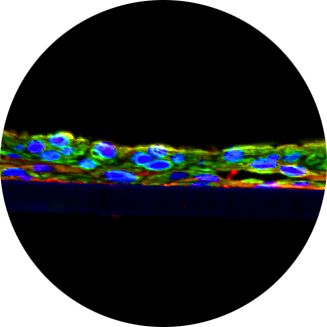
Effects of a single application of hydrolyzed fish collagen on dermal protein expression and tissue architecture in human skin models
- TR Number: 1089
- Authors: Lorenzo Dondero, Giulia De Negri Atanasio, Erica Lertora, Francesca Tardanico, Ilaria Demori, Pietro Storace, Giorgia Allaria, Francesca Rispo, Federica Robino, Elisabetta Perata, Matteo Zanotti-Russo, Sara Ferrando & Elena Grasselli
- Keywords: EpiDermFT (EFT-400), EpiDerm (EPI-200-SIT), TEER, IL-18, skin irritation, fibroblast count, dermis thickness, hydrolyzed fish collagen, Collagen Type III Alpha 1 Chain, COL3A1, Collagen Type I Alpha 1 Chain, COL1A1, Sirius red collagen staining, Elastin, Aquaporin, Face cream, Skin Aging, New approach methodologies, NAM, Next generation risk assessment, NGRA, vitis vinifera seed oil (vitis vinifera (grape) seed oil), snail secretion filtrate, sodium hyaluronate, lilium candidum bulb extract, malus domestica fruit cell culture extract, calendula officinalis flower extract, ceteareth-12, caprylic/capric triglyceride, butyrospermum parkii butter (butyrospermum parkii (shea) butter), dicaprylyl ether, carbomer, glycerin, ethylhexyl palmitate, glyceryl caprylate,, tocopherol, phenoxyethanol, tocoperyl acetate, sodium hydroxide, ethylheylglycerin, lecithin, ascorbyl palmitate, citonellol, citric acid, xanthan gum, geraniol, phonoxylglycerin, lecithin, ascorbyl palmitate, citronellol, cirtic acid, xanthan gum, geraniol, phosholipids, parfum
- Materials Tested: hydrolyzed fish collagen, face cream
- Link to Article: https://www.nature.com/articles/s41598-025-11372-5
The use of collagen as an active ingredient in cosmetic products is becoming increasingly common. Recently, scientific interest has been focused on fish collagen, which is similar to human collagen and can be extracted from fish by-products. This study evaluates the cosmetic potential of Hydrolyzed Fish Collagen (HFC), testing it both as an aqueous solution (S-HFC) and as a formulation in cosmetic products (F-HFC) containing the same amount of HFC. The effects of S-HFC and F-HFC were evaluated on 2D (endothelial and keratinocyte cells) and 3D (EpiDerm and EpiDerm-FT) skin models. The results demonstrated that HFC, as an active ingredient, shows promising effects on skin physiology, including increased cell viability, enhanced wound healing, and an anti-wrinkle effect.