
Advancing Predictions of Oral Drug Absorption, CYP3A4 Induction, and Transporter-Mediated Interactions Using a Human Primary Intestinal 3D Model (EpiIntestinal™)
- TR Number: 1087
- Authors: Paresh P Chothe, Andrea Whitcher-Johnstone, Aniruddha Karve, Diane Ramsden, Niresh Hariparsad
- Keywords: EpiIntestinal SMI-100, Physiologically-Based Pharmacokinetic modeling, PBPK, oral absorption Fa, intestinal availability Fg, CYP3A4 induction, drug–drug interactions DDIs, drug-metabolizing enzymes, transporters, nuclear receptor, pregnane X receptor PXR, Caco-2, PBPK modeling, clinical maximum plasma concentration Cmax, P-glycoprotein P-gp substrates digoxin, dabigatran etexilate, zosuquidar, rifampicin, breast cancer resistance protein facilitated tansport, BCRP, ARV-471, RNA-Seq analysis, proteomics, midazolam, Atorvastatin, Lovastatin, Simvastatin, Budesonide, Buspirone, carbamazepine, phenytoin, rifampicin, Aztreonam, Inogatran, Enalaprilat, Rosuvastatin, Sulpiride, Acyclovir, Carvedilol, Enalapril, Reserpine, Sumatriptan, Atenolol, Cimetidine, Fenoterol, Metformin, Zolmitriptan, Digoxin, Propranolol, Verapamil, Vepdegestrant, ARV-471, ABCB1, CES2, CES1, UGT2B17, UGT1A1, CYP3A4, CYP3A5, UGT2B15, OATP2B1, MRP2, PEPT1, BCRP, P-gp, OATP1A2, Bidirectional transport, TruVivo
- Materials Tested: midazolam, Atorvastatin, Lovastatin, Simvastatin, Budesonide, Buspirone, carbamazepine, phenytoin, rifampicin, Aztreonam, Inogatran, Enalaprilat, Rosuvastatin, Sulpiride, Acyclovir, Carvedilol, Enalapril, Reserpine, Sumatriptan, Atenolol, Cimetidine, Fenoterol, Metformin, Zolmitriptan, Digoxin, Propranolol, Verapamil, Vepdegestrant
- Link to Article: https://pubmed.ncbi.nlm.nih.gov/40657937/
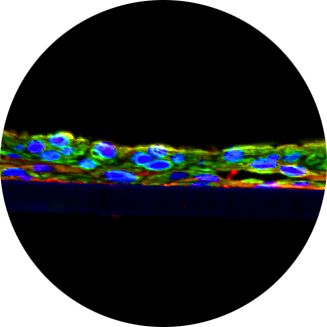
Accurate prediction of oral drug absorption in humans is essential for early drug development; however, physiologically relevant human models are lacking. This study aims to comprehensively assess the EpiIntestinal™, a human primary intestinal 3D model, for its ability to predict oral absorption (Fa), intestinal availability (Fg), CYP3A4 induction, and drug-drug interactions (DDIs). The model showed clinically relevant expression of a key drug-metabolizing enzymes, transporters, and a nuclear receptor, pregnane X receptor (PXR). The model demonstrated a moderate improvement over Caco-2 in correlating permeability coefficients with human absorption data for a set of 18 drugs. However, PBPK modeling, using EpiIntestinal™ permeability data, accurately predicted the clinical maximum plasma concentration (Cmax) of the P-gp substrates digoxin and dabigatran etexilate, unlike the significant underpredictions from Caco-2 data. PBPK modeling using intrinsic clearance and permeability data from EpiIntestinal™ accurately predicted human Fg for CYP3A4/5 substrate drugs (except buspirone). Furthermore, the model demonstrated the induction of CYP3A4 and P-gp (threefold) by a strong PXR inducer, rifampicin. Combining induction parameters of rifampicin from EpiIntestinal™ with those from the TruVivo (human hepatic model) into PBPK modeling accurately captured DDI effects on midazolam, a sensitive CYP3A4/5 substrate. Additionally, the model accurately predicted clinical outcomes of P-glycoprotein (P-gp) and breast cancer resistance protein (BCRP) mediated DDIs for ARV-471. These data underscore the potential of EpiIntestinal™ in predicting human Fa and Fg, and in quantitatively assessing CYP3A4 induction and transporter-based DDIs.