
Human Milk Oligosaccharides Mediate the Host-Microbe Interface in a Model Vaginal Community
- TR Number: 1083
- Authors: Julie A Talbert, Sabrina K Spicer, Shannon D Manning, Jennifer A Gaddy, Steven D Townsend
- Keywords: EpiVaginal VEC-100, Streptococcus agalactiae, Lactobacillus, Lactobacillus crispatus, L. gasseri 33323, L. iners 55195, human milk oligosaccharides, baterial adherences, microbiome, microbial dysbiosis, bacterial vaginosis, field-emission gun scanning electron microscopy, FEG-SEM
- Materials Tested: Streptococcus agalactiae, Lactobacillus, Lactobacillus crispatus, L. gasseri 33323, L. iners 55195, human milk oligosaccharides
- Link to Article: https://pubmed.ncbi.nlm.nih.gov/40459557/
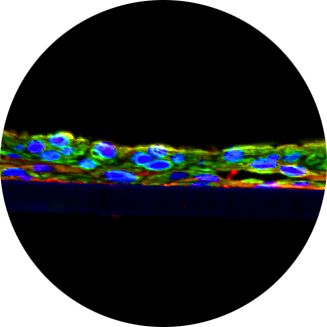
Group B Streptococcus (GBS) is an opportunistic bacterium that can cause severe infection during gestation, leading to adverse pregnancy outcomes and neonatal disease. As current treatments only decrease chances of early onset neonatal disease without impacting the risk of chorioamnionitis, preterm birth, or late-onset disease, novel therapeutics are needed. Here, we demonstrate that human milk oligosaccharides (HMOs) positively modulate cocultures of GBS and Lactobacillus spp., common inhabitants of a healthy vaginal microbiome, across in vitro, ex vivo, and in vivo experiments. HMOs shift the total cell population in vitro to favor Lactobacillus, which was qualitatively visualized via scanning electron microscopy. Lactobacillus adherence to EpiVaginal tissues was also increased with HMOs during coinoculation with GBS. Using an in vivo mouse model of reproductive GBS infection, Lactobacillus crispatus and HMOs prevented ascending infection, reducing bacterial burden in both the placenta and fetus. L. crispatus alone reduced the burden in all reproductive tissues tested except the vagina. Together, these results highlight the benefit of pre- and probiotic treatment to potentially reduce GBS colonization during gestation.