
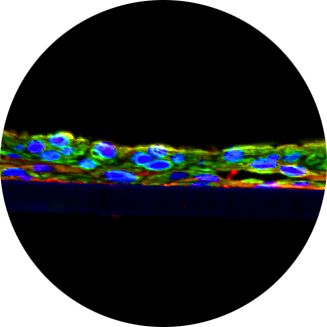
Mitoxantrone modulates a heparan sulfate‑spike complex to inhibit SARS‑CoV‑2 infection
- TR Number: 970
- Keywords: COVID-19, SARS-CoV-2, EpiAirway (AIR-100), spike protein, fusion inhibitor, Infection prevention & control, virus transmission, heparan sulfate, Mitoxantrone, Remdesivir, Bleomycin, LDH
Spike-mediated entry of SARS-CoV-2 into human airway epithelial cells is an attractive therapeutic target for COVID-19. In addition to protein receptors, the SARS-CoV-2 spike (S) protein also interacts with heparan sulfate, a negatively charged glycosaminoglycan (GAG) attached to certain membrane proteins on the cell surface. This interaction facilitates the engagement of spike with a downstream receptor to promote viral entry. Here, we show that Mitoxantrone, an FDA-approved topoisomerase inhibitor, targets a heparan sulfate-spike complex to compromise the fusogenic function of spike in viral entry. As a single agent, Mitoxantrone inhibits the infection of an authentic SARS-CoV-2 strain in a cell-based model and in human lung EpiAirway 3D tissues. Gene expression profiling supports the plasma membrane as a major target of Mitoxantrone but also underscores an undesired activity targeting nucleosome dynamics. We propose that Mitoxantrone analogs bearing similar heparan sulfate-binding activities but with reduced affinity for DNA topoisomerases may offer an alternative therapy to overcome breakthrough infections in the post-vaccine era.
Reference Application
- UV radiation
- Basic cutaneous research
- Epithelial restitution
- Microbial
- Pigmentation
- Transbuccal permeation/penetration
- Micronucleus Assay
- Skin aging
- Intestinal barrier
- Liver Toxicity
- Consumer products
- Biocompatibility
- Anti-aging
- Basic DC research
- Eye irritation
- Microbicide
- Pigmentation studies
- Oral mucosa
- microbiome
- Skin disease
- SARS-CoV-2
- Skin Toxicity
- Cytotoxicity
- reproducibility
- Skin hydration
- UV
- Genetic toxicology
- Microbicide testing
- Radiation
- Tumor invasion
- Probiotic
- Intestinal infection
- Skin re-epithelization
- Crohn's Disease
- Inflammatory response
- respiratory irritation
- UV toxicity
- Basic respiratory research
- Genomics
- STD infection
- Reproducibility - eye (ocular) tissue model
- UV light
- Irritation>Eye Irritation OECD TG 492
- Skin differentiation
- Barrier repair
- Inflamed Bowel Disease
- Visible Light
- pesticides
- Absorption
- Antimicrobial
- Buccal delivery
- Genotoxicity
- Mucosal delivery
- Reproducibility - skin tissue models
- UV protection
- Corneal Drug Delivery
- UV damage
- transporters
- Regulatory Approval
- Review Article
- LOAEL
- Drug delivery
- Infectious disease research
- Buccal drug delivery
- Pharmacotoxicology
- Nasal absorption
- Nanotechnology
- Aging
- Respiratory Disease
- Bacterial infection
- Pollution
- Mildness Testing
- Barrier Disruption
- UVB
- Irritation
- Infection
- Mucosal irritation
- Psoriasis
- Vaginal irritation
- Respiratory immunotoxicity
- Human-on-a-chip
- Atopic Dermatitis
- DNA Damage
- Colitis
- Drug ADME
- Hair Growth
- scalp health
- Permeation
- Infections
- Cosmetics
- Metabolism
- Mucous
- Respiratory infection
- Viral Infection
- Melanogenesis
- Antiviral
- Gastrointestinal Disease
- Hazard assessment
- Biomedical Devices
- artificial saliva
- Skin irritation
- Toxicity
- Cytokine analysis
- Immulogical research
- Nanoparticle toxicology/penetration
- Respiratory toxicology
- MMPs
- Intestinal Permeation
- Bacterial colonization
- Translational toxicology
- Dry skin
- drug skin compatibility
- bacterial adherence
- Allergenicity
- Antioxidants
- Drug absorption
- Immunologicaal research
- Toxicology
- Skin cancer
- Photoaging
- Electrolyzed Water
- Transbuccal drug delivery
- XtraMild skin mildness testing
- Skin moisturization
- Protein Expression
- PBPK Modeling
- Immunological Research
- Apoptosis
- Intestinal toxicity
- Microbicides
- Nanotoxicology
- Skin corrosion
- Skin Sensitization
- Fibrosis
- Oral Pathology
- bacterial vaginosis
- ADME
- Gastrointestinal Inflammation
- anti-wrinkling
- Immunogenicity
- Basic dermal research
- Respiratory research
- Immunotoxicity
- Ocular irritation
- Penetration
- Medical Devices
- Pulmonary Fibrosis
- Oral infection
- vaginal microbiome
- Microphysiological system
- Gastrointestinal Irritation
- Nicotine pouch products
- Inflammation
- Asthma
- Skin corrosion Absorption
- Mucosal
- Oral candidiasis
- Skin lightening
- Organ-on-a-Chip
- Oxidative Stress
- Oral inflammation
- Collagen Remodeling
- Hyperpigmentation
- Barrier Function
- intranasal drug delivery
- Microbial infection
- COPD
- Smoking
- Respiratory toxicity
- Oral irritation
- Skin
- Oral Disease Research
- Skin Damage
- Ocular toxicology
- Drug Screening
- Skin de-pigmentation
- Gastrointestinal Toxicity
- permeation enhancement
- Wound healing
- Smoke
- Tobacco
- Inhalation Toxicology
- Oral mucositis
- Smoker
- Space Research
- Skin Barrier
- Validation
- Nephrotoxicity
- Cancer Research
- Skin Brightening
- excipients
- Phototoxicity
- Research
- Drug development
- Nanoparticles
- Skin pigmentation
- Gingivitis
- Dry Eye
- Drug Metabolism
- Biofilm
- Hepatotoxicity
- Personalized Medicine
- Food Additives
- Sub-categorization
Reference Product
Ready to advance your science?
Our team is ready to provide a cost-free consultation to determine how we can help you reach your research and testing goals. Contact our team of experts today.