
Inside Mattek’s 40-Year Push for Human-Relevant Testing – A Conversation with Alex Armento
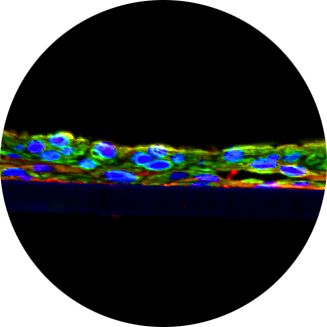
 For more than four decades, Mattek has been at the forefront of non-animal methods (NAMs), turning 3D human tissue models into globally available, ready -to-use, reproducible tools that are reshaping how safety and efficacy decisions are made in the cosmetic, personal care, and pharmaceutical industries. In this Q&A with Drug Discovery News, Alex Armento, Head of Mattek, recently discussed the difference between incremental improvements and true inflection points in NAMs, where animal testing is being displaced fastest and where challenges remain, and what it will take for complex organ-on-chip and multi-organ platforms to move from promising prototypes to routine use. He explains why the future of preclinical science depends on human-relevant models that are not only biologically predictive, but also scalable, standardized, and trusted by both regulators and industry.
Q: Mattek has been developing 3D human tissue models for more than 30 years. How do you distinguish between incremental progress in NAMs and the kinds of advances that actually change how science is done?
A: There is certainly a difference between incremental changes and the big advances that alter decision-making and R&D strategies. Having developed 15 different organ models over the course of 40 years, Mattek has executed incremental changes like higher-throughput formats, longer tissue viability, more complex models, a larger donor inventory with greater biological diversity, and greater reproducibility, and all of those things are important progress that absolutely move the field forward, but they don’t redefine a workflow. The bigger breakthroughs will occur when 3D tissues capture more complex human biology and help scientists answer more complex questions. Things like chronic exposure, immune interactions, multi-cell and multi-organ interactions, and patient-specific responses. The real shift will come when this technology goes from being viewed as a “neat,new research tool” to being viewed as a cornerstone of evidence-based decision-making.
Q: In your view, which areas of research are closest to truly moving beyond animal testing, and which remain the hardest to displace?
A: We’re already seeing a huge shift away from animal testing in the cosmetics and personal care industries, which most frequently use our skin and eye tissues for safety and efficacy testing. The relevant biological markers that answer their questions are readily present in a controlled environment and supported by regulatory validations. Our skin irritation test is validated as a stand-alone in vitro test that eliminates the need to test on animals, for example. These are mature NAMs that have undergone that perception shift from “supporting data” to a genuinely accepted stand-alone method that’s giving product developers better data, which in turn helps them make better products, and satisfies their markets’ demands for ethical testing. The hardest areas to displace animal testing is systemic biology. Reproducing whole-body complexity with immune interactions, endocrine signaling, multi-organ metabolism, and even neurological function, is challenging. Liver, kidney, and cardiac models work very well independently and certainly do provide valuable insight into organ-specific effects, but humans are a multi-organ system, so one of the major goals now is connecting these organs to achieve that organ-to-organ interaction in an in vitro model.
Q: One critique of advanced in vitro systems is that increasing complexity can make models harder to validate and standardize. How do you think about the trade-off between physiological realism and reproducibility?
A: That’s something that’s going to need constant balancing as this technology becomes more prevalent and as regulatory agencies become more accepting of the data it generates. As you enhance the complexity of these models, you naturally introduce more variables, which also makes the technology more predictive because it mirrors the variables of human biology. I think the answer is developing models as complex as they need to be to answer specific context of use questions, but as simple as possible. The skin models with OECD validation are again a great example of a standardized model applied under a specific context of use. The flip side of that is if you’re evaluating a more complex condition that inherently has more biological variables – inflammation, fibrosis progression, immune response, or multi-organ response – the complexity of the model might result in lower reproducibility, but a dramatic increase in biological predictivity. Animal tests have missed a lot of human biological mechanisms, so we also must get away from comparing in vitro human models to legacy animal testing data and instead compare in vitro human to in vivo human. Ultimately, the goal is a complex model with a defined context of use that answers a specific question where you can build reproducibility, transferability, and regulatory acceptance.
Q: Recent regulatory changes have lowered formal barriers to NAM use. In practice, what still holds companies back from relying on NAMs as primary evidence in safety decisions?
A: Regulatory change is very important, but it’s only one piece of the puzzle and it doesn’t automatically create confidence in alternative test methods. What ultimately holds companies back from adopting NAMs is risk. They have decades of historical knowledge tied to animal data, and development pipelines, databases, and decision-making have all been built around it. Mattek has 40 years of reproducible data behind it but is still seen as a “new” technology. Certain NAMs are also not always as easy to integrate into a workflow as Mattek tissues are. Where our tissues only need a standard cell culture lab, other platforms require huge investments in specialized and dedicated equipment which completely alters workflows and infrastructure and requires specialized expertise and staff retraining. That kind of decision is not made swiftly. Researchers will begin to rely on NAMs for safety decisions when the perception shifts to viewing NAMs as scientifically and strategically dependable.
Q: How important is regulatory confidence compared with peer adoption — does change ultimately flow top-down from regulators or bottom-up from industry practice?
A: We’ve seen the biggest shifts occur when bottom-up scientific confidence and top-down regulatory confidence start to reinforce each other. It really starts with scientists and industry teams discovering a method – often through peer adoption – that helps them make better decisions faster, earlier, or with greater human relevance, then the adoption of that NAM occurs faster than regulatory mandates. Regulators typically need to see it in practice in order to validate and accept it, and we have seen this pattern again and again in our 40 years of doing this work. Industry initiates the shift, and regulatory confidence institutionalizes it. A technology can be scientifically respected for years, but once regulators clearly define a context of use and companies know the data will be accepted consistently, adoption moves from experimental to operational.
Q: Organ-on-chip and multi-organ systems are often described as the future, but adoption has been slow. What needs to happen for these platforms to move from promise to routine use?
A: Organ-on-chip and multi-organ systems absolutely have the potential to reshape preclinical science, but the reason adoption has been slower than expected is the difference between technological possibility and operational reality. Building an impressive prototype in a research setting is very different from creating a platform that pharmaceutical companies can use routinely across programs, sites, and points of decision-making. The economics and workflow integration have to improve. Pharmaceutical R&D requires scalability and operational efficiency. If a system requires highly specialized expertise, custom engineering, or is a low-throughput format, it becomes difficult to fit that into a workflow, no matter how technologically sophisticated it is.
Q: One long-standing challenge for NAMs has been scale — both manufacturing consistency and global accessibility. Do you think this is beginning to changing?
Absolutely — and I think Mattek’s experience with 3D human tissue models is actually a very good example of how the field has evolved from niche innovation toward scalable and available solutions. That human-relevant 3D tissues can be manufactured consistently, validated rigorously, and distributed globally in a way that supports real-world adoption. 40 years ago, in vitro tissues were novel handcrafted research tools. Scientifically impressive, but not necessarily practical for widespread industrial or regulatory use. Now we ship 16 different organ models via FedEx to destinations around the world every week, arriving ready-to-use. We have achieved that through highly controlled manufacturing processes, quality control, and lot-to-lot reproducibility so we can deliver tissues that perform consistently from lab to lab and country to country.
Q: Where do you see exciting growth areas for this space?
I think some of the most exciting growth areas are where NAMs are expanding beyond hazard identification and becoming tools for understanding more complex aspects of human biology. They were first used as predictors of acute toxicity, but now they’re being used for more complex disease modelling. We’re seeing researchers use them to study inflammation, respiratory disease, GI disorders, and fibrosis because they provide physiologically relevant insight into the mechanisms behind these diseases, making them useful tools not only for safety testing, but also for drug discovery and mechanistic biology at the cellular and molecular level that has a real impact on human health. Also very interesting is the integration of NAMs with computational modelling and the combination of advanced human tissue models with AI and predictive modelling frameworks that can improve real human outcomes. Finally, one of the most exciting things is seeing the technology mature over the last 20 years with the acceleration of its deployment worldwide, and thinking of its inevitable broader impact in the next 20 years.
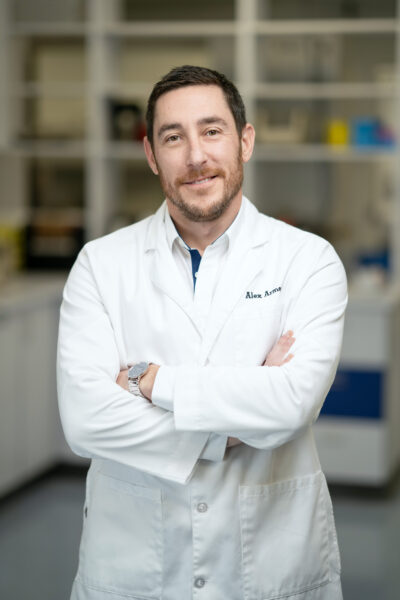
Alex Armento, Head of Mattek
Alex Armento is a biotechnology executive and business leader serving as Head of Mattek, where he oversees the company’s global strategy, operations, and innovation initiatives in advanced in vitro tissue models and human-relevant testing technologies. Since joining Mattek in 2008, he has held leadership roles spanning research and development, sales and marketing, and business development, helping drive the company’s growth into a global leader in 3D human tissue engineering and non-animal testing solutions.
Appointed President in 2018, Armento has led Mattek through a period of growth and innovation, expanding the company’s portfolio of advanced human tissue models and NAMs technologies. Under his leadership, Mattek has strengthened its position as a global leader in human-relevant testing solutions used across the pharmaceutical, biotechnology and cosmetics industries to improve predictive drug development and reduce reliance on animal testing. He has been a strong advocate for next-generation preclinical testing methods that better replicate human biology and accelerate scientific discovery.