
Quantitative risk assessment framework for metal exposure from tampon use
- TR Number: 1112
- Authors: Aryatara Shakya, Sarah Berlinski, Kenneth Unice, Hazel Paulo, David Falconer, Dennis Paustenbach
- Keywords: EpiVaginal VEC-100-FT, tampons, trace metals, leachables, leachate, artificial menstrual fluid, margin of safety, parenteral permitted daily exposures, systemic exposure, TEER, permeability, mass balance, exposure risk, Arsenic As, cadmium Cd, cobalt Co, chromium Cr, lead Pb, mercury Hg
- Materials Tested: artificial menstrual fluid, Arsenic As, cadmium Cd, cobalt Co, chromium Cr, lead Pb, mercury Hg
- Institution: RC Strategic Health Sciences, Jackson, WY, United States, TRC Strategic Health Sciences, Pittsburgh, PA, United States, Charles River Laboratories, Edinburgh, Scotland, UK
- Link to Article: https://www.sciencedirect.com/science/article/pii/S2666765726000669
Background: Trace metals have been reported in menstrual tampons, raising concern about potential health risks. However, risk depends on bioavailable dose rather than product content, and vaginal exposure data are limited. Objectives: This study presents an exposure-based risk assessment framework for metal release, vaginal epithelial permeation, and potential systemic exposure from tampon use.
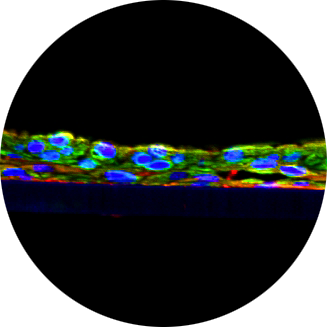
Methods: A commercial tampon was analyzed for arsenic (As), cadmium (Cd), cobalt (Co), chromium (Cr), lead (Pb), and mercury (Hg). Tampons were incubated for 12 hours in artificial menstrual fluid (AMF) at 37◦C. Permeability was evaluated using reconstructed human vaginal epithelium exposed to measured leachate and conservative surrogate solutions at 1,000- and 10,000-fold higher concentrations. Metals were measured in rinses, tissue, and receptor fluid by ICP-MS. Systemic exposure was estimated as maximum estimated exposure dose (EEDmax), and risk characterized using margin of safety (MoS) relative to parenteral permitted daily exposures (PDE).
Results: Mean metal concentrations in AMF leachate were minimal. Only Pb was consistently quantifiable (maximum 3.4 ng/mL), while others were at or below quantification limits. Most recovered mass resided in rinse fractions (~50-95%) with limited tissue association (≤34%) and minimal receptor fluid transfer (generally ≤5%). Under measured leachate conditions, EEDmax values were near or below analytical detection limits, yielding estimated margin of safety (MoS) values > 90,000. Under 1000x conditions, EEDmax remained ≤0.12µg/day with MoS ~270-9,300. At 10,000x, EEDmax values remained ≤0.27 µg/day, and MoS values ranged from 24(Cd) to 3,970 (Cr), all exceeding the safety threshold (MoS≥1).
Conclusion: Systemic exposure to metals from tampon use is negligible. Even under conservative assumptions, absorbed doses were far below toxicological thresholds, indicating de minimis risk under anticipated use conditions. The experimental framework presented here provides a reproducible approach that can be applied to a variety of tampon materials and product types to support future exposure-based safety evaluations