
Photoprotective and anti-inflammatory potential of polyphenol-rich extracts from agricultural by-products of chicory leaves, red onion peel, vineyard pruning, and olive pruning in UV-B-exposed 3D human skin equivalents
- TR Number: 1109
- Authors: Joan Teichenné, Roger Mariné-Casadó, Juan María Alcaide-Hidalgo, Job Tchoumtchoua, Kevin Leonard, Xavier Escoté
- Keywords: EFT-400, UVB, pro-collagen1a1, MMP1, TIMP1, COL1a1, COL1a2, Col1a3, elastin, ELN, IL-1b, IL6, epidermal thickness, sunburn cells, photoprotection, bioactive compounds, polyphenols, polyphenolic extracts, agricultural residues, chicory leaves, red onion peel, vineyard pruning, olive pruning, collagen metabolism, inflammation, skin structural damage, basolateral delivery
- Materials Tested: polyphenolic extracts, agricultural residues, chicory leaves, red onion peel, vineyard pruning, olive pruning
- Institution: Eurecat-Centre Tecnològic de Catalunya, Unitat de Nutrició i Salut, 43204, Reus, Spain, Biomass Valorisation Platform, CELABOR Scrl, 4650, Herve, Belgium, Universitat Rovira i Virgili (URV), Department of Biochemistry and Biotechnology, Nutrition and Metabolic Health Research Group, 43201, Reus, Spain, Institute of Health Pere Virgili (IISPV), 43204, Reus, Spain, Center of Environmental, Food and Toxicological Technology—TecnATox, Rovira i Virgili University, 43201, Reus, Spain, CIBER in Physiopathology of Obesity and Nutrition (CIBEROBN), Carlos III Health Institute, 28029, Madrid, Spain
- Link to Article: https://www.sciencedirect.com/science/article/pii/S2666154325005721
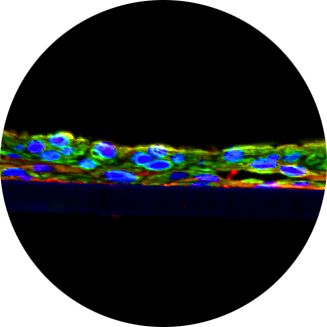
Human skin equivalents (HSEs) serve as a robust model to evaluate the photoprotective effects of bioactive compounds. Polyphenols, known for their antioxidant, anti-inflammatory, and anti-aging properties, have emerged as promising agents for skin health applications in cosmetic industry. In this study, we evaluated the preventive effects of four polyphenolic extracts obtained from agricultural residues —chicory leaves, red onion peel, vineyard pruning, and olive pruning—on collagen metabolism, inflammation, and structural damage induced by UV-B radiation in HSEs. All extracts significantly reduced the presence of UV-B-induced sunburn cells (by 40–60 %, p < 0.001), modulated ECM components and pro-inflammatory pathways. Red onion peel and
vineyard pruning extracts increased COL1α1 mRNA expression by 1.8- and 1.6-fold, respectively (p < 0.05), while the vineyard pruning extract significantly reduced IL6 expression by 50 % (p < 0.01), indicating anti-inflammatory properties. This study highlights the potential of polyphenolic extracts obtained from agricultural residues for skin photoprotection and anti-inflammatory, warranting further research is necessary to elucidate the underlying mechanisms of action.