
Growth modulatory effects of fenretinide encompass keratinocyte terminal differentiation: a favorable outcome for oral squamous cell carcinoma chemoprevention
- TR Number: 1107
- Authors: Daren Wang, Ping Pei, Fortune Shea, Richard Spinney, Albert Chang, Joerg Lahann, and Susan R. Mallery
- Keywords: EpiOral, ORL-300-FT, oral squamous cell carcinoma, synthetic retinoid, fenretinide 4HPR, corneocyte desquamation, sloughing, involucrin, loricrin, transglutaminase 1, TGM1, Ki-67, cancer treatment
- Materials Tested: synthetic retinoid, fenretinide 4HPR
- Institution: Division of Oral Maxillofacial Pathology, College of Dentistry, The Ohio State University, Columbus, OH, USA, The Ohio State University Comprehensive Cancer Center, Columbus, OH, USA, Department of Chemistry and Biochemistry, The Ohio State University, Columbus, OH, USA, Department of Chemical Engineering, Biointerfaces Institute, University of Michigan, Ann Arbor, MI, USA, Department of Material Science and Engineering, Biointerfaces Institute, University of Michigan, Ann Arbor, MI, USA, Department of Biomedical Engineering, Biointerfaces Institute, University of Michigan, Ann Arbor, MI, USA, Department of Macromolecular Science and Engineering, Biointerfaces Institute, University of Michigan, Ann Arbor, MI, USA
Abstract:
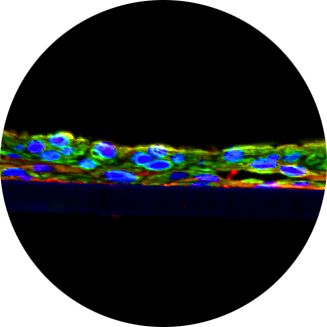
Oral squamous cell carcinoma (OSCC) is worldwide health problem associated with high morbidity and mortality. From both the patient and socioeconomic perspectives, prevention of progression of premalignant oral intraepithelial neoplasia (OIN) to OSCC is clearly the preferable outcome. Optimal OSCC chemopreventives possess a variety of attributes including high tolerability, bioavailability, efficacy and preservation of an intact surface epithelium. Terminal differentiation, which directs oral keratinocytes leave the proliferative pool to form protective cornified envelopes, preserves the protective epithelial barrier while concurrently eliminating growth-aberrant keratinocytes. This study employed human premalignant oral keratinocytes and an OSCC cell line to evaluate the differentiation-inducing capacity of the synthetic retinoid, fenretinide (4HPR). Full-thickness oral mucosal explants were evaluated for proof-of-concept differentiation studies. Results of this study characterize the ability of 4HPR to fulfill all requisite components for keratinocyte differentiation, i.e. nuclear import via binding to cellular RA binding protein-II (molecular modeling), binding to and subsequent activation of retinoic acid nuclear receptors (receptor activation assays), increased expression and translation of genes associated with keratinocyte differentiation [Reverse transcription polymerase chain reaction (RT-PCR), immunoblotting] upregulation of a transglutaminase enzyme essential for cornified envelope formation (transglutaminase 3, functional assay) and augmentation of terminal differentiation in human oral epithelial explants (image-analyses quantified corneocyte desquamation). These data build upon the chemoprevention repertoire of 4HPR that includes function as a small molecule kinase inhibitor and inhibition of essential mechanisms necessary for basement membrane invasion. An upcoming clinical trial, which will assess whether a 4HPR-releasing mucoadhesive patch induces histologic, clinical and molecular regression in OIN lesions, will provide essential clinical insights.